
'Biggest disaster': Gaza infants' lives at risk amid fuel shortages middleeasteye.net

Click to Donate
Every dollar goes to help the people of Palestine
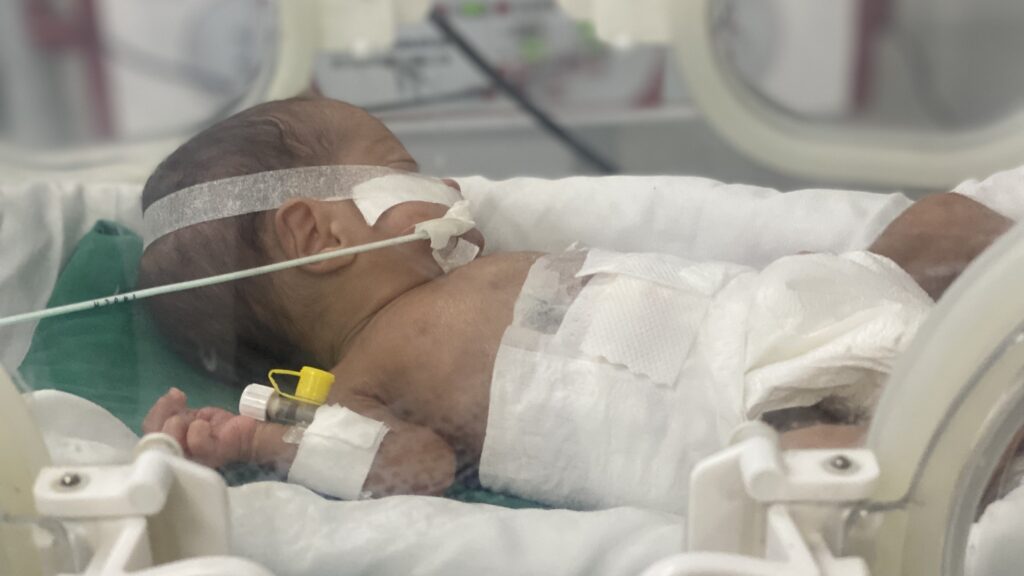
Doctors fear for the lives of 22 newborns on incubators as they plead for international intervention
Palestinian infants reliant on incubators in Gaza are fighting for their lives amid a critical fuel shortage, exacerbated by Israel’s increasingly stringent blockade on aid and essential supplies.
For several days, hospitals and humanitarian agencies in Gaza have issued urgent appeals for international intervention to secure fuel deliveries, as shortages continue to paralyse vital services for over two million Palestinians.
Multiple healthcare centres have warned that operations may grind to a halt, with Israel maintaining restrictions on fuel entering the besieged territory, further straining an already overwhelmed healthcare system.
Mohammed Tabaja, head of the paediatric ward at al-Helou Hospital in Gaza City, said the facility is “100 per cent dependent on the generator”.
His department is responsible for the intensive care of newborns weighing less than 1.5 kilograms, as well as infants suffering from oxygen deprivation and congenital abnormalities, all of whom require uninterrupted electricity.
“We have a problem in the nursery ward: there is no uninterruptible power supply (UPS). The motor shuts down every two hours due to the fuel shortage. When that happens, the electricity cuts out,” he explained, noting that the hospital currently relies entirely on generators.
“This impacts the babies’ lives, as we must restart the ventilators and CPAP [continuous positive airway pressure] machines, all of which require electricity. We’ve been requesting a UPS for three months, but there are no batteries available in Gaza,” he told MEE.
Tabaja said that while the incubators in the ward remain operational for now, the department is severely overcrowded and operating beyond capacity, with 12 incubators being used for at least 22 cases, an occupancy rate of more than 180 percent.
The paediatric specialist notes a significant increase in premature births and underweight infants as a consequence of the ongoing war.
He explained that the extreme stress of the situation has led to growing levels of malnutrition among pregnant women, resulting in a higher incidence of premature deliveries.
“The department faces persistent issues with oxygen, air, and electricity supplies, all of which directly affect the lives of the children. Last month and the month before, we lost infants due to these shortages,” he said.
'Our fear is that we will reach the point where there's no electricity'
– Mohammed Tabaja, head paediatric, al-Helou Hospital
“Fuel is critical, as electricity is not available 24 hours a day. We do not have an oxygen generator and instead rely on manually operated oxygen cylinders.
"This places an enormous burden on staff and creates further shortages. If a cylinder runs out, it could endanger a child’s life,” he added.
Dr Ziad al-Masry, a fellow paediatrician at al-Helou Hospital, warned that the lives of 22 infants are currently at risk due to the fuel shortage, which has caused power outages that disrupt artificial respiration and modern monitoring systems.
“Without this equipment, caring for the children becomes extremely difficult – and in some cases, impossible – as many are directly connected to ventilators,” he said.
In a joint statement issued on Sunday, municipal authorities in central and southern Gaza announced the suspension of essential public services due to what they described as “the complete interruption of fuel” required to operate vital equipment.
The halted services include “water well operations, sanitation, waste collection, rubble removal, and the use of heavy machinery to open roads.
“The occupation’s continued refusal to allow the entry of fuel, despite repeated appeals, has brought municipal services to a standstill, even as local authorities attempt to maintain a minimum level of operations under extraordinary circumstances,” the statement concluded.
voters
Report Story


Leave Your Comment