
Canary Mission: How US uses a ‘hate group’ to target Palestine advocates aljazeera.com

Click to Donate
Every dollar goes to help the people of Palestine
Washington, DC – The United States government has acknowledged its use of Canary Mission — a shadowy pro-Israel website — to identify pro-Palestine students for deportation, sparking anger and concern by rights advocates.
Activists have long suspected that the administration of US President Donald Trump is gathering information from the Canary Mission website to target students and professors.
Heba Gowayed, a sociology professor at the City University of New York (CUNY), said the government’s reliance on an online blacklist that posts personal information to harm and intimidate activists is “absurd and fascist”.
“Canary Mission is a doxxing website that specifically targets people for language that they deem to be pro-Palestinian and therefore, they’ve decided, is anti-Semitic. Its sole purpose is to target and harass people,” Gowayed told Al Jazeera.
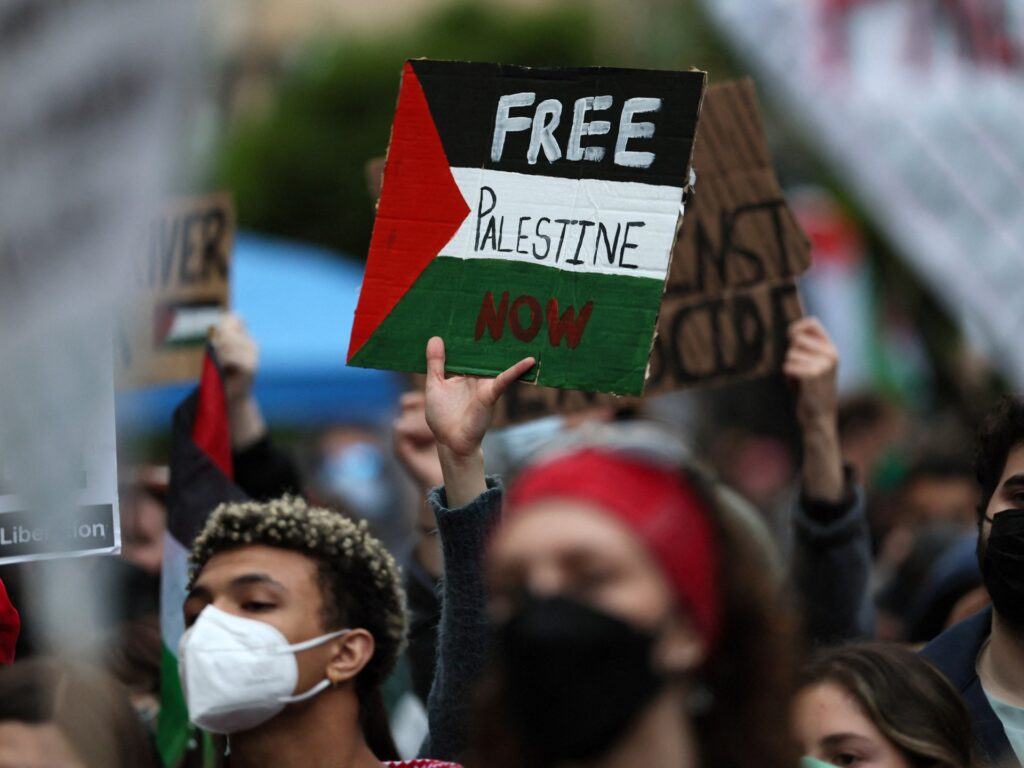
As demonstrations opposing the Israeli atrocities in Gaza swept college campuses last year, Israel’s advocates portrayed the protest movement as anti-Semitic and a threat to the safety of Jewish students.
While activists pushed back against the accusations, saying that the protests were aimed at combatting human rights abuses against Palestinians, conservative leaders called to crush the demonstrations and penalise the participants.
Shortly after returning to the White House in January, Trump himself signed a series of executive orders that laid the groundwork for targeting non-citizens who took part in the student protests for deportation.
In March, Columbia University graduate student Mahmoud Khalil — a permanent resident married to a US citizen — became the first prominent victim of Trump’s campaign.
Secretary of State Marco Rubio invoked a seldom-used provision of the Immigration and Nationality Act to order Khalil’s removal, on the basis that the Columbia student’s presence has “adverse” effects on American foreign policy.
After Khalil, many other students were detained by immigration authorities. Some left the country voluntarily to avoid imprisonment. Others, like Khalil, continue to fight their deportation.
Free speech advocates decried the campaign as a blatant violation of constitutionally protected freedoms.
The State Department did not respond to Al Jazeera’s query on the government’s use of Canary Mission. Instead, a department spokesperson referred to a statement by Secretary of State Rubio from May.
“The bottom line is, if you’re coming here to stir up trouble on our campuses, we will deny you a visa. And if you have a visa, and we find you, we will revoke it,” it said.
DHS did not respond to Al Jazeera’s request for comment.
But the Trump administration may also be using more extreme sources than Canary Mission to deport students.
At Wednesday’s court hearing, Hatch was asked about other sources the government is using. He replied that there was one other website he could not recall.
The court asked Hatch if it might be Betar, a far-right, Islamophobic group with links to the violent Kahanist movement in Israel.
According to transcripts, Hatch replied, “That sounds right.”
Gowayed, the City University of New York professor, called the government’s approach an “egregious overstep and distortion of any kind of notion of justice or legality.
voters
Report Story



Leave Your Comment